In many electronic systems, stable operation depends on how power is generated, distributed, and sequenced across different circuit blocks. If power rails turn on in the wrong order or voltage levels are unstable, processors may fail to boot, memory can lose data, and sensitive components may get damaged. Managing this using multiple discrete regulators and control circuits increases design complexity and failure risk. A Power Management IC helps solve this by controlling multiple power functions inside a single device.
| Image | Part Number / Manufacturer | Description / Specs | MOQ | Datasheet | RFQ | |
|---|---|---|---|---|---|---|
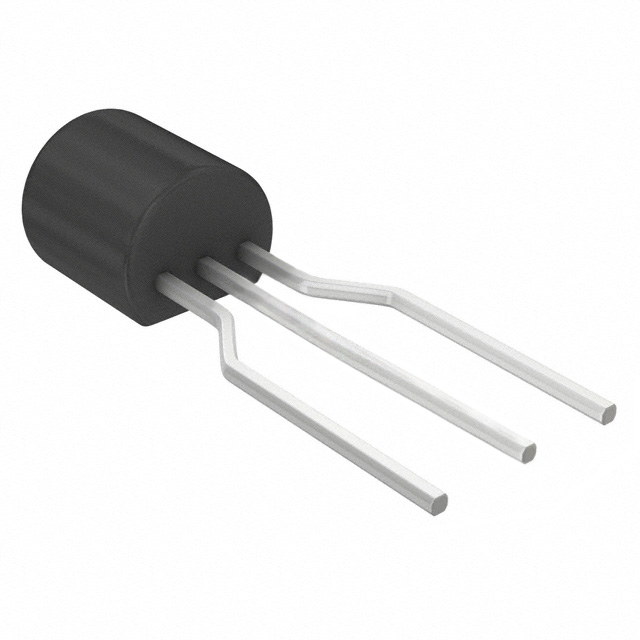 | PN4250A_D27Z Manufacturer: onsemi Category: single bipolar transistors | TRANS PNP 60V 0.5A TO-92-3 | 1 | |||
| PN4249_D74Z Manufacturer: onsemi Category: single bipolar transistors | TRANS PNP 60V 0.5A TO-92-3 | 1 | |||
| PN200A_D26Z Manufacturer: onsemi Category: single bipolar transistors | TRANS PNP 45V 0.5A TO-92-3 | 1 | |||
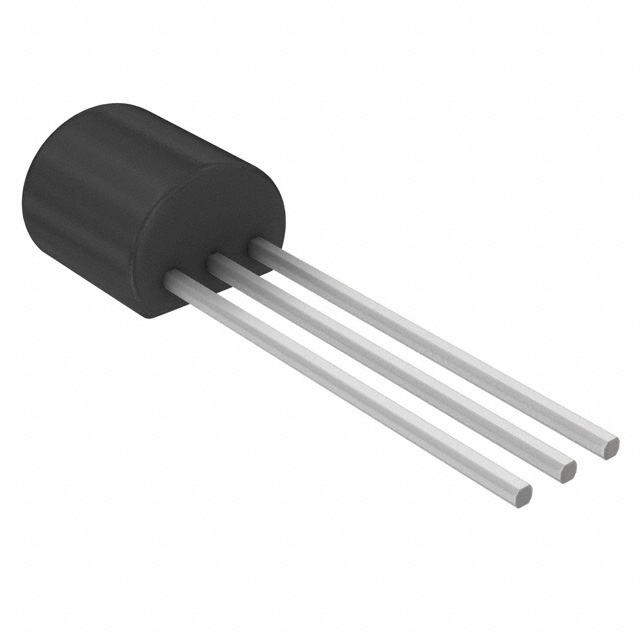 | 2N5961 Manufacturer: onsemi Category: single bipolar transistors | TRANS NPN 60V 0.1A TO-92-3 | 1 | |||
| BC547_J61Z Manufacturer: onsemi Category: single bipolar transistors | TRANS NPN 45V 0.1A TO-92-3 | 1 | |||
| 2N5401NLBU Manufacturer: onsemi Category: single bipolar transistors | TRANS PNP 150V 0.6A TO-92-3 | 1 | |||
| 2N5210_J05Z Manufacturer: onsemi Category: single bipolar transistors | TRANS NPN 50V 0.1A TO-92-3 | 1 | |||
| 2N4401_J61Z Manufacturer: onsemi Category: single bipolar transistors | TRANS NPN 40V 0.6A TO-92-3 | 1 | |||
| 2N4401_J60Z Manufacturer: onsemi Category: single bipolar transistors | TRANS NPN 40V 0.6A TO-92-3 | 1 | |||
| 2N4401_J05Z Manufacturer: onsemi Category: single bipolar transistors | TRANS NPN 40V 0.6A TO-92-3 | 1 | |||
| 2N3702_D75Z Manufacturer: onsemi Category: single bipolar transistors | TRANS PNP 25V 0.5A TO-92-3 | 1 | |||
| 2N3702_D27Z Manufacturer: onsemi Category: single bipolar transistors | TRANS PNP 25V 0.5A TO-92-3 | 1 | |||
| 2N3702_D26Z Manufacturer: onsemi Category: single bipolar transistors | TRANS PNP 25V 0.5A TO-92-3 | 1 | |||
| PN3643_J61Z Manufacturer: onsemi Category: single bipolar transistors | TRANS NPN 30V 0.5A TO-92-3 | 1 | |||
| PN2222_J61Z Manufacturer: onsemi Category: single bipolar transistors | TRANS NPN 30V 0.6A TO-92-3 | 1 | |||
| PN2222A_J61Z Manufacturer: onsemi Category: single bipolar transistors | TRANS NPN 40V 1A TO-92-3 | 1 | |||
| PN2484_D75Z Manufacturer: onsemi Category: single bipolar transistors | TRANS NPN 60V 0.1A TO-92-3 | 1 | |||
| PN2484_D74Z Manufacturer: onsemi Category: single bipolar transistors | TRANS NPN 60V 0.1A TO-92-3 | 1 | |||
| PN2484_D27Z Manufacturer: onsemi Category: single bipolar transistors | TRANS NPN 60V 0.1A TO-92-3 | 1 | |||
| PN2484_D26Z Manufacturer: onsemi Category: single bipolar transistors | TRANS NPN 60V 0.1A TO-92-3 | 1 |
Many systems in operation rely on PMICs selected during original product design. These devices are often tightly linked to processor requirements, board power architecture, and system startup behavior. When a PMIC reaches end-of-life, replacing it can be difficult. Differences in pin layout, sequencing behavior, voltage accuracy, or protection response can affect system stability.
This is common in industrial, automotive, and medical systems where equipment remains active for many years. Maintenance teams often require the same PMIC to avoid redesign or system requalification. Delays in sourcing compatible PMICs can increase downtime and service cost.
Maketronics supports global engineering and procurement teams with reliable sourcing of both active and obsolete Power Management ICs.
A PMIC is an integrated circuit that manages voltage regulation, power sequencing, monitoring, and protection to ensure stable system operation.
Correct power sequencing ensures processors, memory, and peripherals start safely and operate reliably without damage or data corruption.
PMICs are widely used in embedded systems, mobile devices, industrial equipment, automotive electronics, and communication hardware.
Replacing an obsolete PMIC may require redesign and system validation because differences in pin layout, sequencing behavior, and protection features can affect stability.