In automated industrial systems, accurate real-time data from the physical environment is essential for reliable machine operation. If position, temperature, pressure, or motion data is incorrect or delayed, machines can misoperate, reduce product quality, or halt production entirely. Control systems require stable and repeatable signals to maintain process consistency. Industrial automation sensors solve this problem by converting physical conditions into electrical signals that control systems can process reliably.
| Image | Part Number / Manufacturer | Description / Specs | MOQ | Datasheet | RFQ | |
|---|---|---|---|---|---|---|
 | SEN-11207 Manufacturer: SparkFun Electronics Category: Force Sensors RoHSREACH | FLEXIFORCE PRESSURE SENSOR - 25L | 1 | |||
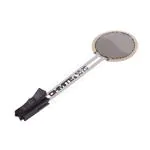 | FSR07DE Manufacturer: Ohmite Category: Force Sensors RoHSREACH | FORCE SENSING RESISTOR | 1 | |||
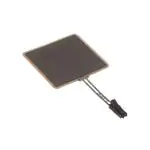 | FSR01DE Manufacturer: Ohmite Category: Force Sensors RoHSREACH | FORCE SENSING RESISTOR | 1 | |||
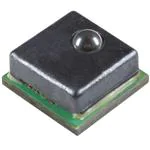 | FMAMSDXX005WCSC3 Manufacturer: Honeywell Sensing and Productivity Solutions Category: Force Sensors RoHSREACH | FMA SERIES FORCE SENSOR, COMPENS | 1 | |||
 | FMAMSDXX005WC2C3 Manufacturer: Honeywell Sensing and Productivity Solutions Category: Force Sensors RoHSREACH | SENSOR FORCE 0.51KGF BALL | 1 |
Industrial automation sensors are typically selected during early machine or process design because control calibration, safety logic, and signal conditioning circuits depend on specific sensor characteristics. When a sensor reaches end-of-life, replacement can be difficult if measurement curves, response timing, or output interfaces change.
This is common in industrial plants where equipment operates continuously for many years. Maintenance teams often require the same sensor model to avoid recalibration, software changes, or safety revalidation.
Delays in sourcing compatible industrial sensors can lead to production downtime and increased maintenance costs.
Maketronics assists global engineering and procurement teams with reliable sourcing of both active and obsolete Industrial Automation Sensors.
Industrial automation sensors detect physical conditions such as position, temperature, pressure, and motion, converting them into electrical signals for control and monitoring systems.
They provide real-time data that enables accurate machine control, improves product quality, enhances safety, and supports predictive maintenance.
Common types include proximity sensors, temperature sensors, pressure sensors, flow sensors, vibration sensors, and level detection sensors.
Measurement accuracy, response time, output interface compatibility, environmental rating, and calibration requirements should be verified to ensure proper system performance.