Some embedded designs reach a point where simple control is not enough. Systems may need faster data handling, complex math processing, or multi-layer control logic running at the same time. When basic controllers are pushed beyond their limit, response delays increase and real-time behavior becomes harder to maintain. A microcontroller processor helps solve this by offering stronger processing capability while still keeping embedded control features integrated in one device.
| Image | Part Number / Manufacturer | Description / Specs | MOQ | Datasheet | RFQ | |
|---|---|---|---|---|---|---|
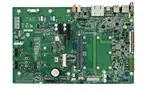 | SOM-DB2500-00A1 Manufacturer: Advantech Corp Category: Embedded Processor Development Kits RoHSREACH | SMARC 2.0 DEVELOPMENT BOARD | 1 | |||
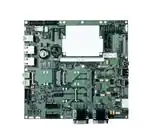 | 51300-0000-00-0 Manufacturer: Tripp Lite Category: Embedded Processor Development Kits RoHSREACH | 9155 15KVA 208/120V W/XFMR | 1 | |||
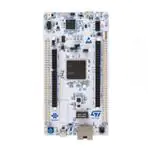 | NUCLEO-H753ZI Manufacturer: STMicroelectronics Category: Embedded Processor Development Kits RoHSREACH | NUCLEO-144 STM32H753ZI EVAL BRD | 1 |
Many deployed systems still depend on microcontroller processors selected during early product design. These processors are often tightly linked to firmware structure, peripheral mapping, and timing behavior. When these devices reach end-of-life, replacing them is rarely simple. Differences in instruction handling, memory architecture, or peripheral layout can require firmware modification and system revalidation.
This is common in industrial, medical, and automotive equipment where product life can exceed ten years. Maintenance teams often require the same processor to maintain system compatibility and avoid redesign or recertification. Delays in sourcing compatible processors can lead to downtime and higher service cost.
Maketronics supports global engineering and procurement teams with reliable sourcing of both active and obsolete Microcontroller Processors.
A microcontroller processor is an embedded control device that combines strong processing power with integrated peripherals to manage both control logic and advanced data processing tasks.
It is preferred when applications require higher processing performance, complex algorithms, multi-sensor data handling, or real-time communication processing.
A microcontroller processor provides deterministic control, lower power consumption, and integrated peripherals, while application processors focus on high-level computing and require external support components.
Obsolete processors may require firmware updates, architecture adjustments, and system revalidation due to differences in instruction handling and peripheral design.