In embedded hardware design, system stability depends heavily on how sensing, processing, and output control are synchronized. When these functions are split across multiple ICs, signal delay increases, debugging becomes harder, and power consumption often rises. Many embedded systems need a compact controller that can continuously read inputs, process logic, and update outputs in a predictable cycle. A Microcontroller Unit (MCU) solves this by integrating processing, memory, and peripheral control into one device built for embedded control systems.
| Image | Part Number / Manufacturer | Description / Specs | MOQ | Datasheet | RFQ | |
|---|---|---|---|---|---|---|
 | PCIE-1761H-AE Manufacturer: Advantech Corp Category: Embedded Computer Interface Boards RoHSREACH | 8-CH RELAY & 8-CH IDI PCIE CARD | 1 | |||
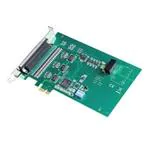 | PCIE-1884-AE Manufacturer: Advantech Corp Category: Embedded Computer Interface Boards RoHSREACH | 32-BIT, 4-CH ENCODER COUNTER PCI | 1 |
Many field systems still use MCUs selected during original product design. These devices are tightly linked to firmware, PCB layout, peripheral setup, and timing behavior. When an MCU reaches end-of-life, replacement is rarely simple. Differences in register layout, memory structure, clock behavior, or peripherals may require firmware updates and system revalidation.
This is common in industrial, automotive, and medical equipment where systems operate for ten years or more. Maintenance teams often require the exact MCU to avoid redesign or recertification. Delays in sourcing compatible MCUs can increase downtime and service cost.
Maketronics supports global engineering and procurement teams with reliable sourcing of both active and obsolete Microcontroller Units (MCUs).
MCUs integrate processing, memory, and peripherals into a single device, enabling predictable control, reduced hardware complexity, and improved system reliability.
By reducing external components and wiring, MCUs minimize failure points and ensure consistent timing and system stability.
Yes. Many MCUs include sleep modes, clock scaling, and peripheral shutdown features that help reduce energy consumption in battery-powered and always-on systems.
Obsolete MCUs may require firmware modification, system revalidation, or hardware redesign due to differences in architecture, timing behavior, and peripheral implementation.