Industrial electronic systems often operate in environments where electrical noise, temperature variation, vibration, and continuous operation are common. Power sources in these systems may not always be stable, and load conditions can change suddenly depending on machine operation. Standard commercial converters may not always maintain stable output under these conditions. Industrial DC-DC converters are designed to provide reliable voltage conversion while handling harsh electrical and environmental stress conditions.
| Image | Part Number / Manufacturer | Description / Specs | MOQ | Datasheet | RFQ | |
|---|---|---|---|---|---|---|
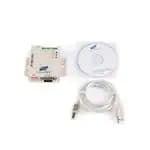 | ES-U-3001-MB Manufacturer: Connective Peripherals Pte Ltd Category: Adapters RoHSREACH | USB TO 1-PORT , METAL, RACK MOUN | 1 |
Industrial DC-DC converters are typically selected early during system design and closely matched to system voltage requirements, load behavior, and thermal operating limits. When these converters reach end-of-life, replacement can be difficult. Differences in mechanical size, efficiency, protection features, or pin layout can affect system performance and compliance testing.
This is common in industrial systems where equipment may operate for ten years or more. Maintenance teams often require the same converter model to avoid redesign or requalification. Delays in sourcing compatible industrial converters can increase downtime and operational cost.
Maketronics supports global engineering and procurement teams with reliable sourcing of both active and obsolete Industrial DC-DC Converters.
Industrial converters are designed for harsh environments, offering wider temperature ranges, higher reliability, improved noise immunity, and enhanced electrical protection.
They provide stable power for controllers, sensors, and communication systems, ensuring reliable machine operation and minimizing downtime.
Yes, industrial DC-DC converters are designed to operate across wide input ranges to handle power fluctuations commonly found in industrial environments.
Replacement may require system validation because differences in size, efficiency, protection features, or pin layout can affect performance and compliance.